Featured

How to draw a croquis

​Step by Step Drawing a Fashion Croquis

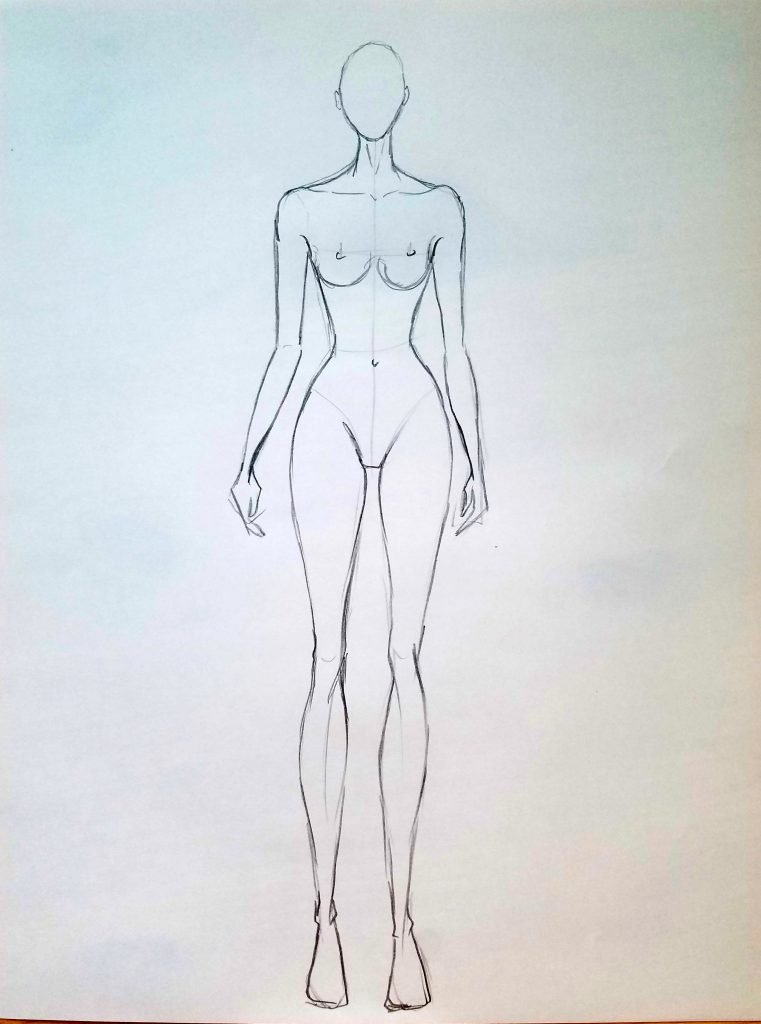
​Drawing a basic fashion figure is not about art but rather it represents a tool for communicating a design. Once you have your first fashion croquis template, you will be able to use it for tracing and drawing clothes over and over again. The fashion figure is very simplified and the most important things is to make it look anatomically correct, well proportioned, almost like a mannequin. 

​The Fashion Croquis will be 9 heads in length and the size of different body parts is expressed as multiples or fractions of that length. Most of the body parts resemble to common geometric shapes such as ovals, cylinders, spheres, rectangles and so on. Having in mind a corresponding geometric shape and then making the adjustments will make drawing parts of the body much easier and more accurate.

​Step 1 – Warm Up Exercise

​Take a pencil and a piece of paper and place two dots randomly on the paper about 10 cm (3 inches) apart. Put your pencil on one dot and draw a line to the other one quickly without removing the pencil from paper. Repeat this a couple of times until your lines feel smooth and natural.

​Step 2 – Draw an Axis Line and Mark Sections

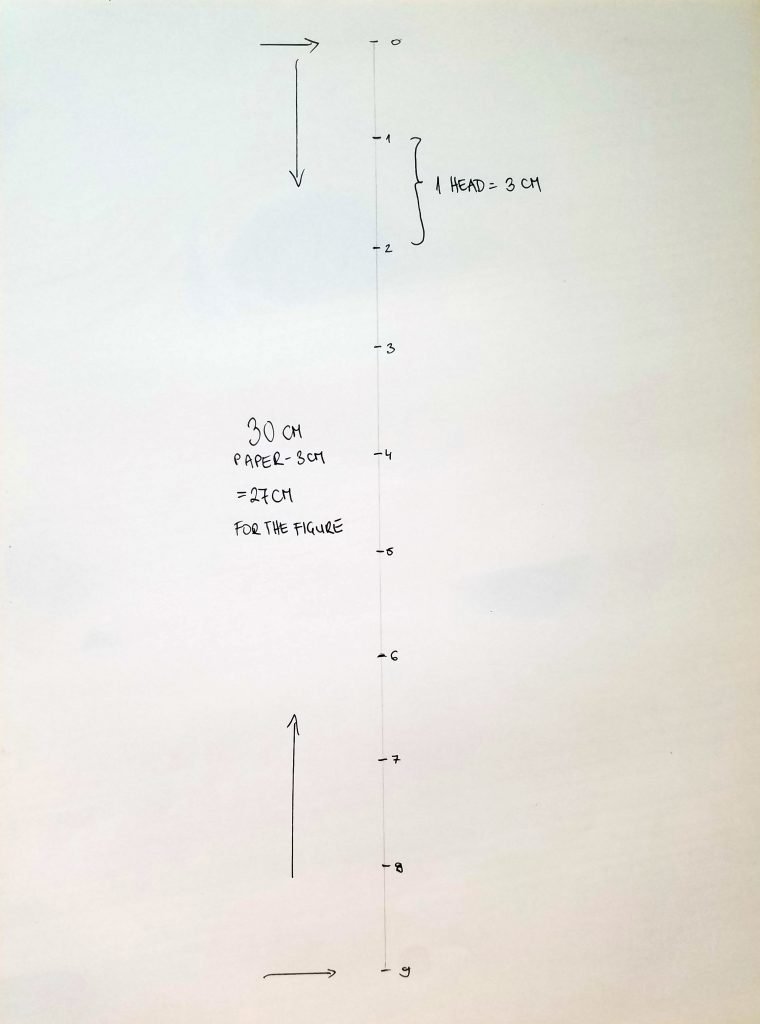
​Draw an axis line from top to bottom of your page and divide into 9 equal parts. Leave about 1 cm above and below your figure and divide the rest into equal parts. For example if you have an axis line long 32 cm then each section would be 3.5 cm. 
how to draw a fashion croquis

Step 3 – ​Start Drawing Body Parts

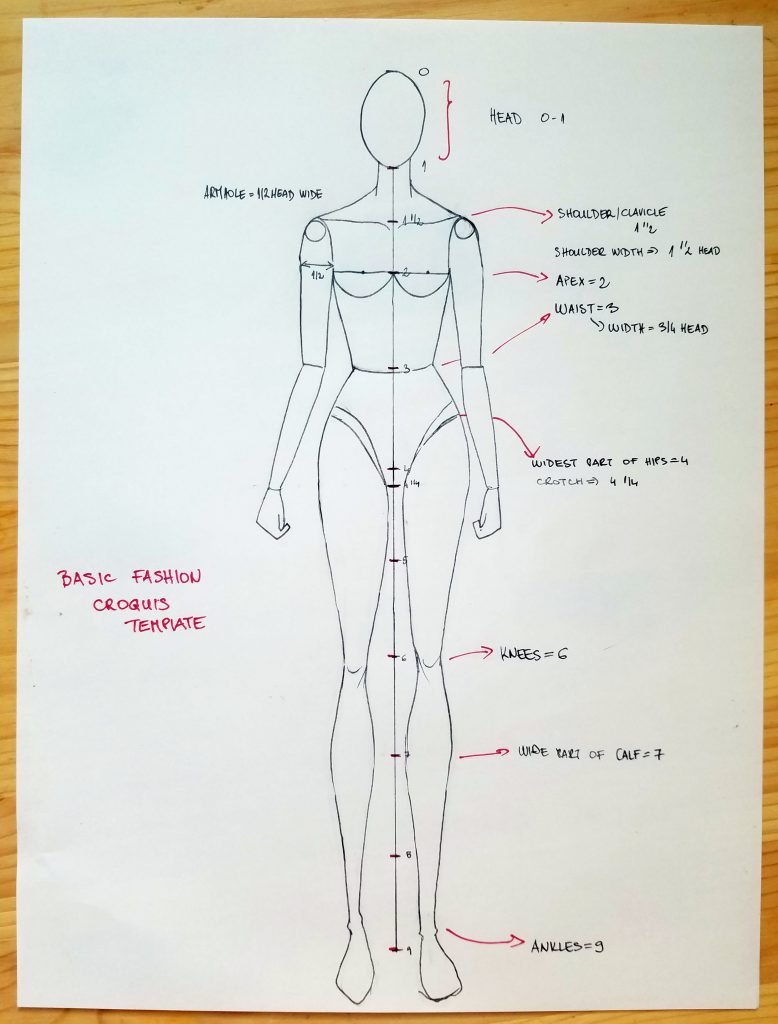
​Between 0 and 1 draw an oval that represents your head. You can practice making an oval separately on a piece of paper and when you are confident it looks somewhat symmetrical draw one on your axis line.

Draw the neck from the bottom of the head to 1 1/2 and make it nice and narrow.

At the 1 1/2 point you should draw shoulders and make them wide 1 1/2 head as well. Draw the shoulder line slightly above the base of the neck and at each end of the shoulder make a small circle representing the joint and rounded shape of the shoulder. Armholes should be wide around 1/2 head long and turned inwards slightly.

Place two dots equally distanced from the axis that will represent your bust line and then draw torso tapering down to head no 3 where the waist is located and should be 3/4-1 head wide.

The widest part of the hip should be placed at 4 heads with crotch on 4 1/4 heads. The hips extend from 3 to 4 and are 1 1/2 head wide.

Upper arm is 1 1/2 heads long and connects the armhole to the elbow which is located around point no 3. The lower part of the arm extends from the elbow to 4 with slightly longer finger tips.

Mark your knees at 6 and make them 1/4 head wide. Draw lines down from the crotch on either side to the knee. Draw the outer thighs from hips tapering down to 6. Try drawing them fluently, without lifting your pen from the paper.

Point 7 represents the widest part of the calf and it should be slightly wider than the knee. Slide down from the calf to number 9 creating a very thing ankle. The feet extend a little bit beyond the 9 heads.
how to draw a fashion croquis

Step 4 – Fleshing Out the Croquis

​In order to create a realistic and finished look, you should add some muscles that will give a rounded overall look. You can draw larger or smaller muscles according to your preference.
how to draw a fashion croquis

Step 5- Repeat and Practice

​The first time you draw a croquis will probably take a lot of time and it will not feel as fluid as it should be. Practice is the key to learning and perfecting everything so don’t give up and try again. You can do your first drawing with a light mechanical pencil and then draw the figure 5 times using a dark,soft pencil like 2B.  Try ​making a croquis out of a cardboard or craft paper so you get familiar with the proportions of the croquis and have fun practicing.
Catwalk History

Whether onstage or online, today’s fashion shows are bigger than ever — and broadcast to audiences of millions. But their roots are more humble and intimate than you might expect.

In a typical fashion show, models walk the catwalk dressed in the clothing created by the designer. Clothing is illuminated on the runway using various forms of lighting and special effects. The order in which each model walks out wearing a specific outfit, is usually planned in accordance to the statement that the designer wants to make about their collection. It is then up to the audience to not only try to understand what the designer is trying to say, but to also visually deconstruct each outfit and try to appreciate the detail and craftsmanship of every single piece.

Occasionally, fashion shows take the form of installations, where the models are static, standing or sitting in a constructed environment. A wide range of contemporary designers tend to produce their shows as theatrical productions with elaborate sets and added elements such as live music or a variety of technological components like holograms, for example.

The modern fashion show dates back to the 1860s, when pioneering English fashion designer Charles Frederick Worth used live models instead of mannequins to present his creations in Paris.

By the turn of the century, events known as “fashion parades” had started to spread to London and New York. But those shows were small, mostly private events for buyers. Photography was often banned, for fear that the designs would be copied.

That all changed after World War II, when fashion houses opened their doors to larger audiences and began to seek publicity.

One of the icons of this new era was Christian Dior, whose first fashion show in Paris 1947 paraded billowing skirts flared out from tailored waists — an aesthetic so revolutionary that it was dubbed “The New Look.” Heralding in a new period of femininity and opulence, it was a stark departure from wartime austerity.

By the 1960s, the serious, stony faces of models walking in rigid formation gave way to a lighter aesthetic, with models encouraged to show their personalities as music blared. And the more avant-garde fashion shows of today began life in the ’80s and ’90s, when runways morphed into mini-productions, embellished with lighting, sound effects and elaborate staging.

In 1998, Yves Saint Laurent set a runway show in a sold-out stadium, one hour before the soccer World Cup final between France and Brazil. It involved 300 models, 900 backstage hands and 4,000 stadium staff, and was televised to about 1.7 billion people.

In recent years, fashion shows have evolved into ambitious theatrical presentations that blur the line between art and commerce. The late British designer Alexander McQueen put a runway in a wind tunnel, created a supermodel chess set and once ended a show with a masked Joan of Arc surrounded by blood and fire.

And who better to exemplify how far fashion has come from the private salons of Paris than the late German designer Karl Lagerfeld, who staged shows in fictitious airport terminals and supermarkets, and even turned the Great Wall of China into a catwalk?

Louis Vuitton

The Louis Vuitton brand is synonymous  with the jet-setting chic. His classic designs have endured, and it remains one of the world’s most recognizable luxury brands.

In this article, we’ll take a look at how a teenager’s solitary odyssey to Paris turned into one of the best success stories of all time.

Louis Vuitton

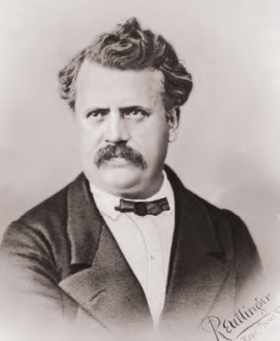
Louis Vuitton  was born on August 4, 1821, in Anchay, located in the eastern part of France. A few years after his mother died, he left the small town of his birth to seek fortune in the nation’s capital. Stopping frequently to work odds jobs along the way, it took him two years to reach his destination on foot. After his arrival in Paris at the age of sixteen, he was hired as an apprentice by Romain Maréchal. Vuitton packed and made boxes in the workshop for seventeen years.

This was during the dawn of the Industrial Revolution in France. Along with the numerous technological advancements, travel was made easier by the increasing number of rail and steam ship lines. More people travelling = higher demand for luggage.

Louis Vuitton ad

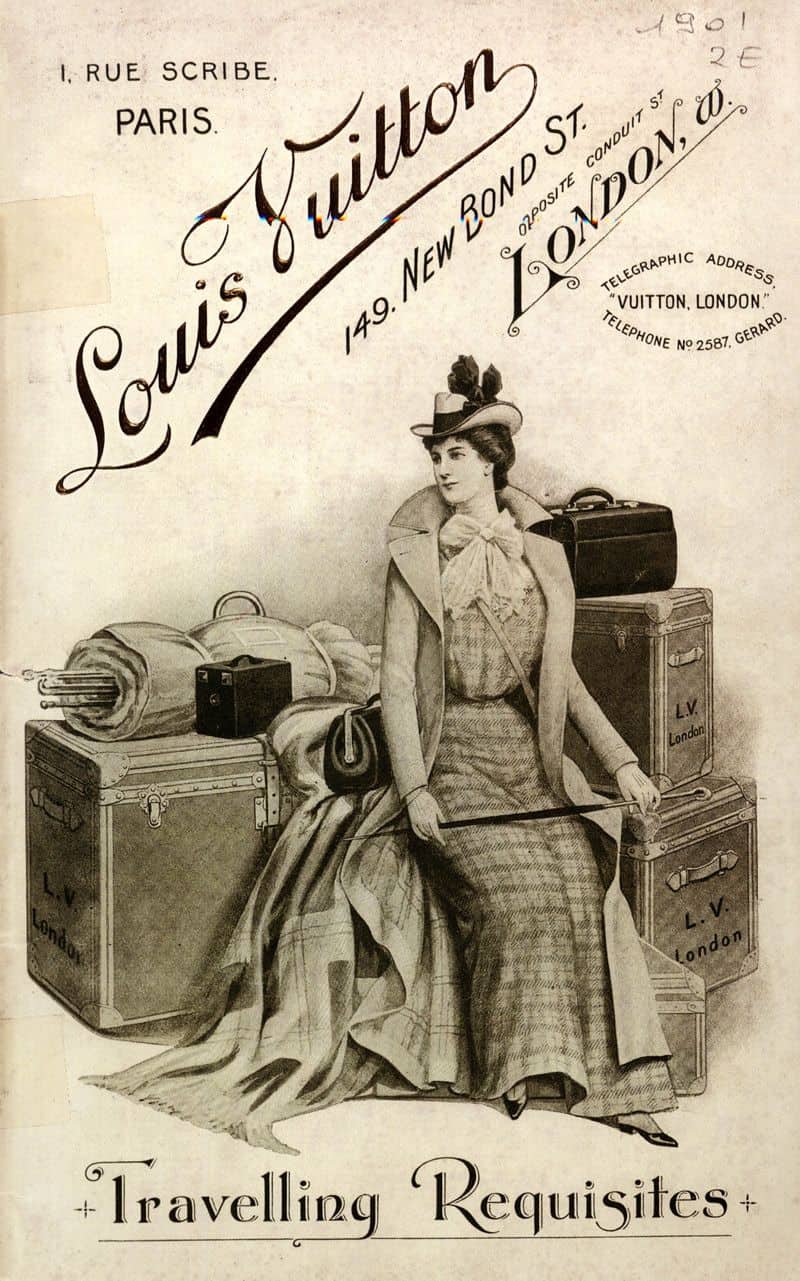
In 1854, Vuitton opened his first shop in Paris at 4 Rue Neuve-des-Capucines, advertising that he, ‘securely packs the most fragile of objects’. At that time, dome shaped steam trunks were the most popular style of luggage available. Vuitton revolutionized the game by fabricating square luggage that was easily stackable, and that also allowed for garments to be hung upright. It was a success, and attracted affluent clientele such as Emperor Napoléon III’s consort, Empress Eugénie de Montijo.

Harry Houdini

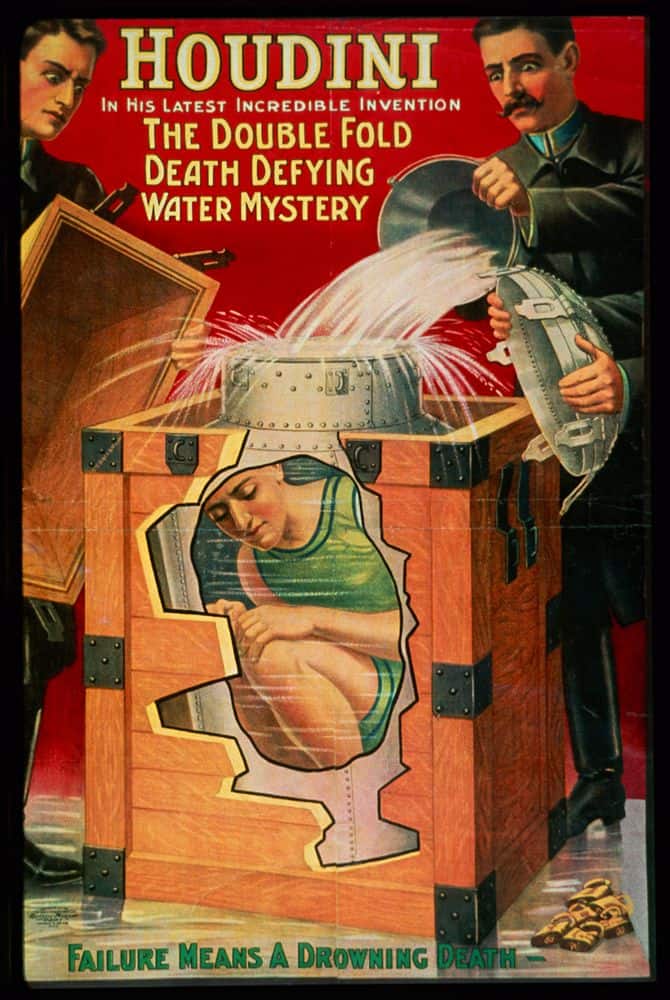
Harry Houdini and the ‘lock that no-one could pick’

Along with other innovations, such as waterproof luggage made out of canvas, foldable beds, and made to order luggage customized for his clients, the brand also developed a lock that ‘no one could pick’ for their trunks. In 1896, George Vuitton (Louis Vuitton’s son), patented the single lock system with two spring buckles. The efficiency was undisputed. George was so confident with the quality of the locks that he publicly challenged famed escape artist and illusionist, Harry Houdini, to break out of a locked Louis Vuitton trunk. Unfortunately for us, history does not record Houdini’s response. The lock system is still used by the company today.

LV monogram

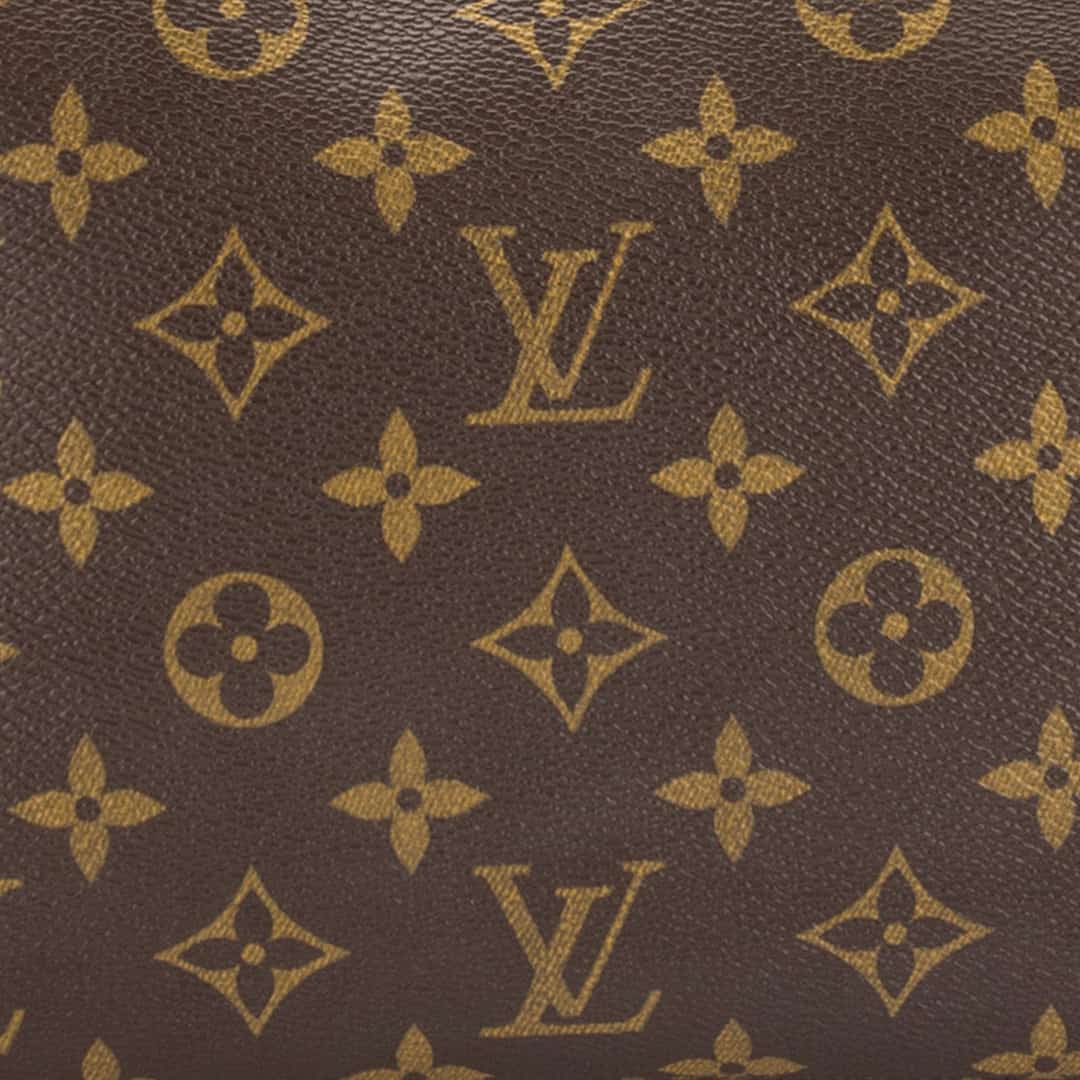
The famous ‘LV’ monogram

After Louis Vuitton’s death in 1892, George took over the reins of the company. It was he who created the now instantly recognizable ‘LV’ monogram with flowers on brown leather. This was done in an attempt to thwart fraudulent copies, (a problem that still plagues the company) and was inadvertently a genius branding move. It remains one of the most popular selling prints.

Louis Vuitton ad

WWII

In 2004, Stephanie Bonvincini’s book, ‘Louis Vuitton, A French Saga’ revealed that the family had links to the French Vichy government, who collaborated with the Nazis during the occupation in WWII. The book states that not only did the company benefit financially from their dealings with the Nazis and the Vichy government, but also that they fabricated images of Pétain (the Chief of State of Vichy France) to positively promote his image.

French luxury goods conglomerate, LVMH (who purchased Louis Vuitton in 1987) responded, “This is ancient history. The book covers a period when it was family-run and long before it became part of LVMH. We are diverse, tolerant and all the things a modern company should be.”

From luggage, to handbags and sneakers?

Louis Vuitton introduced their first leather handbag in 1930, called the ‘Speedy’, and never looked back. In 1997, the company branched out to include a fashion, accessory and perfume line. They still create custom made pieces for their high-end clientele, and all of their luggage and bags are hand-made by highly skilled craftsmen/women.

Currently there are 460 Louis Vuitton boutiques internationally, and the company remains one of the highest grossing luxury brands in the world. But is it worth the hefty price-tag? I’ll let you be the judge…

Gucci Gucci Gucci

When we think of high-end brands, Gucci is often one of the first which comes to mind.

While not everybody can afford to buy Gucci items, some people consider the brand as a staple in their wardrobe.

Here are 30 interesting facts you might not know about this high end brand!

  1. Gucci was founded in Italy in 1921.
  2. Guccio Gucci was the main man behind the company. He established it in Florence when he was 40 years old.
  3. The famous double G logo stands for Guccio Gucci.
  4. Although Gucci began in Italy, a country known for its fashion, the style was inspired by those living in London and around England.
  5. When it first began, the company manufactured quality leather luggage items. Handbags and briefcases are still some of the most popular Gucci items.
  6. Gucci got his inspiration when he was working as an elevator operator in London’s swanky Savoy Hotel. He met famous celebrities such as Winston Churchill and Marilyn Monroe, and their accessories inspired him to start his own brand.
  7. Many celebrities around the world are hardcore fans of this brand, including rapper 2 Chainz who famously said, ‘When I die, bury me inside the Gucci store.’
  8. Among the first items to be made by Gucci were detachable leather bags for saddles. He sold them to keen horsemen in Italy.
  9. It’s easy to figure out where the recognizable horsebit logo came from. This logo was first seen in the 1950’s and has remained a key part of the brand ever since.
  10. It was first seen on saddle bags before Gucci changed it to a silk addition and started using it on many other products, including jewelry and briefcases.
  11. Until he died in 1953, Guccio Gucci personally managed the brand.
  12. After his death, his sons took over the business and promoted the products among Hollywood celebrities.
  13. The popular Gucci Hobo Bag was used by celebrities such as Elizabeth Taylor.
  14. Flora was a print first seen on scarves, and was specifically requested by Grace Kelly, Princess of Monaco.
  15. The scarf was designed by Rodolfo Gucci, one of Guccio’s sons.
  16. The GG logo was not created by Gucci himself. It was designed in 1960 to honor Guccio Gucci after his death.
  17. During the 1940’s, Italy was under the rule of Dictator Benito Mussolini. The fascist regime meant that leather was often very difficult to acquire, so many Gucci products were made using silk.
  18. The 1980’s saw Gucci almost go bankrupt after scandalous stories of the Gucci family hit the press.
  19. In an attempt to bring about some positive change, Tom Ford was appointed the position of Creative Director at Gucci in 1994.
  20. Within 5 years, an increase of 90% in sales was reported and the House of Gucci was worth about $4 billion. Ford was the largest shareholder at one point during his time at the company.
  21. The Gucci “Genius Jeans” entered the Guinness World Records as the most expensive pair of jeans in the entire world. They were valued at a whopping $3,134 back in 1998.
  22. Many high-profile designers work alongside Gucci, including Alexander McQueen and Stella McCartney.
  23. In 2005, Gucci decided to enter a partnership with UNICEF. This means that a percentage of all profits are donated to the organization, helping children to get a better education and clean water in third-world countries.
  24. The Bamboo Shopper is one of the most iconic Gucci items, but many people are surprised to hear of how it came about. When leather was sparse, designers had to experiment with other materials, including bamboo.
  25. Sixty years after Gucci founded the business, the company had its first runway show. It was held in Florence where it all began.
  26. Many items have been around for years, but they are redesigned and improve regularly. The Flora scarf, for example, was reinvented in 2015 for the Cruise Collection.
  27. Frida Giannini became the Creative Director in 2006 after Tom Ford left to start his own brand.
  28. In 2015, fashion designer Alessandro Michele took over as the Creative Direction. Since then, sales have grown by 12% and Gucci is even more prominent at world-class events such as Milan Fashion Week.
  29. It was the first brand to host a fashion show at Westminster Abbey, London, which took place in 2017.
  30. Gucci’s Chime for Change project aims to help empower young girls and women and has successful funded over 200 different projects so far.

What is Streetwear Fashion ?

Streetwear fashion is a youthful casual style of dressing inspired by the sneaker culture and skateboarders of California and hipsters of New York. It emerged in the 1980s and has since developed into one of the most distinctive and iconic genres of clothing around today.

7 commonly seen clothing/accessories in streetwear fashion

1 T-shirts

Cannot imagine street style without them – The T-shirts may be Plain or Printed. The printed ones have vibrant coloured artwork, slogans, graffiti. Loose fitting or even baggy t-shirts or fitting t-shirts under jackets are included. Depending on the fashion, the t-shirts maybe short or can even go up to the knees as in longline t-shirt. Black, grey and white are the preferred colors

For girls, this translates to tank tops and even crop tops

2 Jeans

Dark blue raw denim jeans is a good start in bottom wear. Ripped jeans, jeans that have gone through many types of washes, etc are all included in street style.Those with lots of functional pockets are preferred.

A Skinny fit is a staple. The tapered style of jeans has been a favourite from the start of this fashion style and that has not changed

Denim jeans shorts with shredded/fringed edges are streetwear for girls.

3 Sweatpants/joggers

Dropped crotch baggy pants are what I see as popular now in this category. For girls, leggings will do, in place of sweatpants.

4 Casual Jackets

Fashion changes the style of jackets – Long jackets in wool are preferred but this may change today, tomorrow. Denim jackets and wool duster coats, leather jackets in casual fit are all good.  Boys have their military style jackets which are cool and timeless. Bomber jackets, Biker jackets, all are streetwear cool.

5 Pullover Hoodies

This is one clothing that you cannot imagine being without in a streetwear wardrobe

For girls, this is boyfriend hoodies/sweatshirts.

6 Sneakers

Sneakers are the preferred footwear for this style and among them, white is the preferred colour

Ankle boots are another preference for footwear

7 Headwear

Beanies, Baseball caps (Dad hats), bandanas – streetwear takes them all

Fashion Styles

  1. Streetwear Style
  2. Ethnic fashion style 
  3. Formal Office Wear
  4. Business Casual
  5. Evening Black Tie
  6. Sports Wear
  7. Girly Style 
  8. Rocker Chic Style
  9. Skateboarders
  10. Goth Fashion
  11. Maternity Style
  12. Lolita Fashion
  13. Gothic lolita style
  14. Hip Hop Style
  15. Chave culture Style
  16. Kawaii fashion
  17. Preppy style
  18. Cowgirl fashion style
  19. Lagenlook Fashion style
  20. Scene fashion style
  21. Girl next door fashion style
  22. Casual Chic Style 
  23. Geeky chic Style
  24. Military style
  25. Retro Fashion
  26. Flapper fashion (20’s look)
  27. Tomboy
  28. Garconne look
  29. Vacation (Resort) style
  30. Artsy Fashion style
  31. Grunge style
  32. Punk
  33. Boho/Bohemian chic
  34. Psychedelic Fashion style
  35. Cosplay Fashion
  36. Haute Couture fashion style
  37. Modest fashion
  38. Rave fashion
  39. Flamboyant style
  40. Ankara Fashion Style

Croquis

Croquis drawing is quick and sketchydrawing of a live model. Croquis drawings are usually made in a few minutes, after which the model changes pose or leaves and another croquis is drawn.

The short duration of the pose benefits models because they do not need to keep still for a long time; this also benefits the artists because it helps them concentrate on the essential elements of the pose, or the most important parts of the drawing. An artist does not have time to draw all the details, so they learn to concentrate on the important elements. Croquis is also a good method of drawing subjects that generally do not stand still and pose, such as insects, animals and children.

After the initial sketch, croquis drawing can be used as a foundation for another work of art such as a painting or may be used as a work of art itself.

The word croquis comes from French and it simply means “sketch”.

In fashion, the term refers to a quick sketch of a figure (typically nine heads tall as this is the accepted proportions for fashion illustration) with a loose drawing of the clothes that are being designed. Often a large number of croquis drawings will be created for one finished look, which is fully drawn and finished.

Design a site like this with WordPress.com
Get started